
Global Economic Geography
How Economic Geography Impacts International Investment

Geography of the economy is central in establishing the location and forms of international investments since it determines the economic, infrastructural, and spatial processes of regions and countries. Before investing capital, investors consider geographic factors like location to market, supply of natural resources, pool of labor, political security and accessibility to trade routes. These variables affect the risk, profitability, and productivity. Other countries that have strategic positions, such as those among the shipping routes, economic centers, are most likely to have more international investment because of better accessibility and reduction in logistical expenses.
Similarly, highly networked areas of infrastructure, proficient labour and online interconnected features make investments to foreign direct investment (FDI) competitive. Conversely, regions whose infrastructure, geographical location or politics are unfavorable can make investments undesired, even though there is still undiscovered potential.Economic geography also influences the agglomeration of industrial activities into economic zones or a city specialized in an economic activity that appeals to investors who want to exploit synergies. Understanding the geography of investment flows in a globalized economy enables policymakers to design and create favourable business conditions, and gives investors an opportunity to maximize returns by matching business strategies with investments in areas that enhance long-run growth, stability, and access to global markets.
Location and accessibility drive investment decisions
Location is very important in drawing foreign investment. Companies determine the level of business access to suppliers, consumers and partners in a specific area. Easy access to shipping lines, national boundaries and trade routes can serve to reduce the cost of transportation, enhance access to the market and promote efficiency. Investors prefer to focus on areas with developed logistical systems, special economic zones, and direct links with major economies because they can maximize speed, reliability, and profitability to cross-border operations.
Coastal regions attract trade-focused industries
Access to international investment trade is easy because the coastal cities have major ports. This provides ease in transportation which can cut on the time and cost of shipping hence develop such regions into export-based sectors such as logistics, productions, and even ocean-based services. Such cities are also likely to have developed infrastructure and will incorporate integration with global supply chains, making them more attractive to international investors interested in having efficient distribution and trade services.
Landlocked nations face logistical challenges
Certain countries that are landlocked often rely on other surrounding countries to enable them access the international shipping lines. This dependency raises the prices of transport, the customs process and may slow the movement of the goods. Such logistics could make investment in industries that need speedy and inexpensive exports undesirable unless large investments on infrastructure are done.
Proximity to global markets reduces costs
Logistical advantages are available to investors in the region surrounding the larger consumer markets such as in North America, Europe, or East Asia. These regions provide shorter transit on the shares of delivery, cheaper shipping costs and shorter time to access end-users hence its appeal of being an ideal manufacturing, warehousing and distribution region. Global supply chains can preferentially consider such closeness to investors as an advantage.
Transportation infrastructure influences capital flow
High quality, modern and efficient transport infrastructures, including highways, ports, airports, and railways contribute to investment attractiveness of regions. These systems save the producer cost and time to transport goods and people, facilitating high efficiency in operation. The quality of infrastructure is, according to investors, an important pointer towards the future economic prospects and competence in trade.
Special economic zones enhance geographic appeal
Tax, ease in regulations, and offering a better infrastructure, special economic zones (SEZs) in the presence of either a trade corridor or at a coastal location are considerably preferred. These incentives make international investors come in by lessening the cost of setting up business and greater access to the international investment markets. It is at these strategic locations that SEZs become a magnet of investment either in manufacturing, logistics and services among other fields.
Natural resources and environment shape investment potential
Natural conditions and provision of natural resources are at the focus of attraction of the sector-specific investments. Of particular concern to geography are energy, agriculture and extractive industries. Investors assess not only the mere availability of some valuable resources, such as minerals, oil, or water but also the stability of the environment, the sustainability policy, and climate-related risks. Areas which could provide valuable natural resources coupled with robust environmental frameworks can form a major attraction to long-term investment, and sustainability is a rising asset of concern within the international captives.
Resource-rich regions attract extractive industries
Regions with huge oil deposits, minerals or forest forests automatically attract investors in oil, mining, timber sectors. These locations can be epicenters of economic developments when political and legal bounds are put in place as well. This is usually followed by infrastructural development, making the region even more attractive as well as supporting its strategic investment value with time.
Water access supports agricultural investment
Agriculture based investment is pinned on water availability. Fine areas that have a regular supply of water and fertile soils are in demand to carry out large scale agriculture, food production and agro-processing. Investors favor those regions in which the irrigation infrastructure is available or can be realistically established to sustain long-term cultivation and export activities.
Climate affects long-term project viability
The sustainability of the agricultural, real estate and infrastructure projects is influenced by climate patterns directly. There are chances that regions that experience extreme weather patterns are dangerously exposed to investors, e.g. droughts, floods and storms. With increasing climatic changes, the requirement of long-term vulnerability and adaptability of the environment have been incorporated into investment strategies in their geographical evaluation.
Renewable energy zones influence green investment
Investors in Green energy will be attracted to geographies that would provide the best natural conditions e.g. great sunshine, wind corridors or hydrological resources. Sites such as deserts to produce solar energy or mountain valleys to produce hydro power are competitive advantages as far as clean energy production is concerned, which is currently adjusted across the globe since investments have moved towards sustainable and low carbon portfolio.
Environmental regulations and sustainability matter
Investors who care about ESG are attracted to regions that have balanced yet strict environmental standards. Effective sustainability policies, conservation, and transparency in regulation make the environment favorable in the long term to invest. These areas are considered more secure investments towards future-proof development, particularly, in industries that are sensitive to resources and produce environmental impact.
Labor markets and human capital affect investor interest
The nature of the labor markets has a great impact on the investment flows. Geographic areas are evaluated on the basis of the quality, availability and cost of its work force. The ability of a given location to attract various industries is dictated by the education levels, demographic trends, vocational training, and productivity. Cities with their concentration and special talent might appeal to high-tech investments, buffering a lower-paying or rural location to capitalize on the labor-intensive industries. Analysing the local labour environment enables an investor to match operational requirements with geographical factors of economy making the operation more efficient in the long run.
Urban centers offer skilled labor pools
The combination of cities and university towns, research centers, and innovation centers are bound to pull the industries that necessitate the skilled community workers. High-growth areas like technology, finance, and healthcare tend to settle on an urban area because of the workforce present (educated, diverse, and innovation content). There is also a high level of collaboration and a shorter development cycle thus relevant to investors.
Demographics signal long-term labor availability
Population of youthful, growing regions are an indication that regions have a future labour supply. The industries which especially find these demographics desirable include manufacturing industries, retail and call center industries that require significant workforce. Investors will look at a place where they are assured of a constant and consistent supply of labour.
Labor costs influence location choice
Regions with low labor cost are more attractive to cost-sensitive industries including textiles, assembly of electronics and customer service. On the other hand, high wage regional clusters with a skilled workforce are more likely to experience investment in high technology, R&D and professional services in which skill merits the price premium.
Workforce productivity enhances return on investment
Raw labor costs are usually secondary to productivity. Areas whose workers manage to perform with efficiency and always produce quality results attract more investments in the long run. High productivity minimizes the operational risks and maximizes the total returns on investment of any industry.
Education and vocational training attract high-tech sectors
Investors in the high-tech industry favor regions where education is stressed, and where there is education in STEM and technical subjects. The availability of talent oriented graduates and vocationally trained manpower enhances the confidence of investors in the prices of providing innovation and maintaining a competitive edge in such areas such as biotech, IT, and engineering.
Political and economic stability reduce investment risk
Geographic factors that are important in attracting international investment include political and economic stability. Nations that have stable government, coherent economic management, and in which the law is respected create a safe environment to issue the long-term capital. When deciding where to invest, the risks include political instability, volatile currency exchange rates and unpredictable regulations and policies. In a more stable environment, the risk of policy changes, crisis, or financial loss are reduced and such areas are much more desirable locations of implementing projects where stability is essential and which require the protection of the law, as well as the availability of the market.
Stable governments inspire long-term capital commitments
Foreign investors prefer destinations that have low levels of corruption, legally suited contracts as well as reliable political structures. The stability allows planning over several years, building infrastructure and reinvestments not only in the energy, transport, and manufacturing sectors. Legal safeguards and foreseeable leadership encourage investors to have a sense of security when it comes to repayment of returns in the future.
Free trade agreements expand geographic opportunities
The nations that are associated with free trade agreements (FTAs) have a chance of expanding their markets by levying lower taxes and creating easy rules to follow. This sees them as active centres of regional activities, production and distribution. Indicators of policy alignment and openness through use of FTAs are good pointers to long term investors as well.
Political unrest discourages foreign investment
Investors tend not to be interested in areas where there are conflicts or political issues or civil unrest. There are risks in the form of project delays, loss to assets or even expropriation. Instability erodes business sustainability and may encourage hasty withdrawals of businesses out of the market hence discouraging the influx of foreign money in these places.
Currency and monetary policy influence returns
The stability of exchange rates and wise central banking play an important role in safeguarding the earnings of investors. Volatility currencies or poor control of money involves financial losses to the investors. Low inflation countries on the other hand, with predictable behavior of currency attract more investments both short term and long term.
Regulatory transparency supports investment confidence
There must be clear and cohesive legal regulations in terms of property rights, taxation and laws governing foreign ownership. In a situation where rules are known and investors trust them, they will be willing to invest capital. Unpredictability or frequent reform of the law, however, is an indication of risk and discourages long-term investment.
Clusters, cities, and regional networks attract capital
Investment always goes to the areas that have a high production of geographical concentration of firms, services and assisting industries. The clusters take advantage of access to labor markets, smooth logistics, and connected infrastructure, thus increasing efficiency and productivity. Being close to talent, financial services, and innovation centres, especially in so-called global cities and in trade corridors across regions, enhances investor confidence further. In this kind of an environment, presence of abundant skilled personnel and opportunity to venture into research institutions boosts the speed of business growth and competitiveness.
Moreover, effective city planning and open active local government can curb the red tape and operational risks. Innovating partnerships and collaborative ecosystems that welcome such a partnership and promote innovation provide a friendly environment towards scalable long-term investment. All these are benefits that make these places always attractive to foreign investors since there is a stable platform that would expose them to growth opportunities and which has lowered the entry barriers and increased chances of success in terms of returns.
Industrial clusters offer operational synergy
The industrial clusters provide an opportunity to thrive with a business environment based on proximity to suppliers, skilled labour and research facilities. Automobile manufacturing in Germany or electronics in Taiwan–what it has in common is expense savings, cooperation, and speed of innovation. Such concentrated ecosystems appeal to investors due to the natural efficiencies and minimized risk therein.
Global cities serve as investment hubs
Large cities that receive foreign capital are London, Dubai, and Singapore because they have a well-developed financial system and good political and international investment ties. Such cities present an effective legal framework, developed infrastructure and qualified human capital hence very suitable to multinational organizations. This is as a guarantee of proprietary and stable systems and professional networks gives credence to smooth business operations. Consequently, all these cities have found to be good destinations of financial services and international investments in their geographical locations with high returns and shelf life to its investors.
Innovation corridors support high-tech investment
Silicon Valley, and Shenzhen are innovation trends or corridors where education, research, finances and technology start-ups meet. These centers pull the investment of high technologies through promoting entrepreneurship and technological advancement. The rapid innovation cycles including access to a pool of talent and synergy between the academic institutions and the private enterprises means that investors are favored. Examples of such ecosystems are good breeding grounds in creating a new technological solution and commercializing new technologies. Their compound setting is what has made them the best investment areas when it comes to innovation-led development and a befitting potential in terms of the long-term benefits.
Regional supply chains create investment momentum
The more cities are surrounded with supply chains in various regions, the more attractive they are to manufacturing, logistics and retail investors. Such networks enhance access to the market, make delivery fast and enhance productivity in production and distribution. Geographic diversification through strategic coordination enhances competition of the sector in the international investment market. These regional networks are considered by investors to be a necessity to scalability and profitability, thus it is an influential feature in location decision. Supply chains are either efficient or inefficient; efficient supply chains enable long-term economic activity and regional growth and subsequently attract constant investment.
Local governance and city planning influence investor decisions
Investors are interested in dealing with cities that have processes of governance, permit efficiency and long-term venturing with stable infrastructures. Easy understanding of the rules and urban planning minimize business risks and work delays, creating better business performance. Business-friendly cities and those with a stable leader would be more confident and encourage reinvestment. What attracts investors most especially is when the authorities of the area do planning that helps the economy in growth. Stable governance and predictable patterns of growth significantly affect the investment decision and advance sustainable urban prosperity.
Conclusion:
International investment is a very strong entity in economic geography, and has greatly influenced the areas in which the companies are going to work or extend the main resource obtaining areas. Such choices can depend on the physical area of a place, quality of infrastructure, availability of resources, the strength of the labor market, and political stability. With global competition becoming a real issue and the supply chain becoming more complex than ever before, geographical factor has become an even more important consideration when coming up with a strategic plan of investment.
The increase in the digital infrastructures, the establishment of regional trade blocks and economic unions are blurring the geographic borders as there is increased connectivity and integration. Such advancements permit a business to run more easily across the borders and therefore geography is not only a factor of distance, but it is a factor of strategic advantage. By educating themselves about such processes, policymakers are better able to place their areas in such a way that international capital flows towards them through levels of investment in education, governance, infrastructure and innovation ecosystems etc.
To business, when investment strategy matches geographic strength, a higher level of operating efficiency, resilience to disruption in markets across the globe, and longer-term sustainable growth are achieved. In globalization, it is no longer an option to learn the interaction of economy geography and international investment, but a necessity. Individuals who understand and take advantage are most likely to succeed in the emerging global economy and gain a competitive advantage.
Willing to match the investment strategy with the location-based wisdom? Use economic geography to sharpen and inform smarter, more strategic decisions, and to locate previously unknown but opportunity-rich global locations as growth drivers, risk-mitigating factors and profit maximizers. This is the right place that can make you successful- begin the research.
FAQs
Q1- What is economic geography?
Economic geography is the geography of economic activity, focusing on the manner in which economic activity, trade and investment are affected by location and other geographical factors.
Q2: What is (are) the reason(s) about geography being important to investors?
The costs, risks, market access and the availability of the resources are influenced by geography and the resources adjusts the decisions on investment.
Q3: What are the effects of effective location on the coast?
The coastal areas can be favored by the investment in trade because of the convenience to access the international shipping channels and the export markets.
Q4: What is near-shoring in the investment strategy?
Nearshoring is the process of moving manufacturing facilities closer to its consumer markets in order to become more cost-effective, to decrease the risk, and to cut down on lead time.
Q5: Does foreign investment depend on political instability?
Yes, risk averse investors are usually scared away by political turmoil and apprehension.
Q6: What is the importance of cities in international investment?
Cities provide infrastructure facilities, skilled human resources, and other finance related services which help to attract international capital and assist in the global running of business.
Global economic geography is the key element of ascertaining how goods, labor, and services, as well as, capital flow through borders which influence the composition and the functioning of the world economy. The supply chain, investment strategy, and prices pattern are directly affected by the location of trade centers, endowments of natural resources, as well as the urban concentration of customer markets. Strategically positioned countries like the one that is close to major shipping, the ones that hold deep-water ports, or have energy corridors often control trade networks, supply chain links and receive large tracts of foreign investment. Resource endowed areas have a bearing on world commodity markets since they determine the rate of production, export strategies and major metropolitan centers serve as the engine of innovation and consumption, which determine the global demand.
Furthermore, creation of regional trade blocks and the climate-driven geographical constriction has developed to influence the market operation more and more. Trade blocks result in reduction of tariffs, alignment of policies and opening up businesses and climate risks require governments and businesses to respond by investing in renewable energy, Infrastructure resiliency and supply chains. These geographic aspects have both a combined effect on development of infrastructure, distribution of labor, energy politics as well as acquisition of technologies amongst others globally. To businesses and policymakers, economic geography will also present a crucial way of predicting the future of the markets, reducing the risk and determining future business growth prospects. It allows the businesses to construct a more robust chain of suppliers, streamline logistics and position themselves strategically to enter into emerging or docketed markets.
Global Trade Networks and Economic Geography
The economic geography of the world has a profound effect on global trade as the geographical position of nations in relation to key shipping lines, markets, and sources determines the place in international trade. Countries that are located in strategic choke points such as the Suez Canal or the Strait of Malacca have so much control over shipping rates, delivery times, and overall prices charged around the world. Advanced transport infrastructure, modern ports, efficient airports, and high-speed railway help countries make their supply chain reliable, cost effective in logistics, as well as being able to attract foreign investment. However, geographic concentration leads to some weaknesses as well; global markets are at risk in case of natural catastrophes or political unrests. Also, investments in the digital infrastructure, strategic trade agreements enhance regional integration and competitiveness in the global market.
Strategic Locations and Shipping Routes
Global trade dynamic is controlled by countries that are located in key shipping routes. Bottlenecks such as the Suez Canal and Strait of Malacca enable them to control the price of shipping and speed of delivery as well as the global pricing mechanism. This geographical advantage firms up economic leverage, which places these countries in strategic positions in world trade. Foreign investment is usually steered by their control that guides development of regional and international trade policies.
Transport Infrastructure and Connectivity
Advanced transport network makes a country competitive in trade among other countries. The presence of state-of-the-art ports, enhanced rail roads and efficient airports makes the costs of logistics and delivery schedules more effective. This is a good connectivity that draws foreign investment and entices the manufacturing and distribution hubs into these nations. Such infrastructure provides businesses with reliability of supply chain and therefore allows these countries to deal with the growth of the economy in the region and influence approaches to multi-regional expansion of markets.
Supply Chain Vulnerabilities
International supply chains that are focused on a particular point on the globe are exposed to greater risks. Production and distribution because of natural disasters, political instability or pandemics in such regions may lead to volatility in the global economic geography market. To alleviate such vulnerabilities, companies are also engaging in broadening sourcing and logistics networks. The risks induced by geography have given resilience and adaptability critical importance to businesses facing intricate international supply-chain management and the establishment of consistency in access to international markets.
Digital Trade Corridors and E-commerce
Geography has come to cyberspace and is influencing e-commerce. Those countries which invest in the well-developed internet infrastructure, data centers, and logistics technology establish the so-called digital corridors in cross-border e-commerce. Such increased connectivity enables companies to go international and consumers to easily find international products. These kinds of geographical advantages in the digital economy contribute in boosting economic growth and create the bargaining power of a country in the emerging world trade patterns.
Strategic Trade Agreements
The formations of trading alliances and negotiation of benefits by countries are influenced by geography. The urge to access lower tariffs as well as better access to markets by countries prompts them to sign regional agreements, which are located near big economies. These agreements not only increase the supply chain resilience but as well improves the economic integration. It is possible to attract foreign investment in nations by intelligent use of geographic location and ensure that economic growth surges and that nations remain competitive in the ever more united world market.
Resource Distribution and Commodity Markets
Natural resources are affected directly by the geographic location of the commodity markets. Countries that have oil, gas, minerals and fertile soils control supply chains and establish benchmarks in prices. Their export policies, tariffs and its production levels are long-ranged consequences of investing impacts and market demand levels. Resource poor countries can sometimes enter into alliances, or end up investing massively in foreign countries in order to gain access, which is the cause of geopolitical competition and the focus of long time market planning. This is a dynamic in that economic geography offers a significant level of planning in global trade.
Energy Geographies and Market Pricing
Areas that have plenty of oil and gas are so powerful to energy markets. Fuel costs, supply volumes, and energy security can be influenced drastically by the changes in the levels of production, political development, or policy changes in these regions. Their geographical control influences the energy-sustainable nations to invest within their geographical control to diversify their energy sources and get long-term contracts features.
Rare Earth Elements and Technology Industries
Very rare earth elements, which are essential to high technologies, are nationalised within the borders of certain countries. Nations such as China and the Democratic Republic of Congo have important reserves hence they also have an upper hand in pricing and exportation policies. This real or predicted monopoly that exists geographically affects the production around the world, makes supply chains to diversify as well as make technological innovation so as to minimize the dependency.
Agricultural Production Zones
High-quality farmlands like the state of Brazil, Ukraine and the U.S. mid-west are the key to food security of the world. Conditions in terms of geography such as the quality of soil and climate as well as water determine crop outputs and prices. Global price increases and food shortages can be triggered by disruption due to droughts, floods or political instability in these localities.
Resource Nationalism and Export Controls
Export bans, tariffs or production restrictions are sometimes used by resource-rich nations as a geopolitical weapon. This is also an approach referred to as resource nationalism, which influences world commodity supply and prices of business. Such policies can stimulate the economy of countries but have the potential to disintegrate international supply chains especially to countries that rely on imports, forcing them to find other sources or even craft self-sufficiency ideas.
Investment in Resource-Rich Regions
Very often foreign investments seek those territories in which there are natural resources, contributing to the economy expanding and infrastructure advancement. Yet, this geographic concentration is also capable of increasing competition and geopolitical tension. As nations acquire positions in resource rich areas, they enhance their control in markets, avenues to major resources, and define the current international trading patterns and alliances.
Urban Hubs and Consumer Markets
Cities run the consumption and innovation in the international markets. Major cities are hugely capitalized, technologically advanced, and talent-rich, which drives them to set out trends in financial and retail work and cultural production. These are the markets that companies go after first in order to introduce their products due to their purchasing ability and demographic mix. Foreign investment also occurs in global cities making them magnets to multinational companies. Being economic hubs, they create demand patterns that often distort beyond their boundaries and affect regional and even international market strategies.
Mega-Cities as Consumption Drivers
Great cities of tens of millions of population and concentrated affluence are mega engines of consumption. Their high purchasing power makes businesses more willing to test and introduce a product that usually stamps the strategies in the global market. These cities determine the demand trends in everything, including technology, luxury items, supply chains, and production efforts throughout the globe.
Innovation Clusters and Market Disruption
High-tech centers such as Shenzhen or Silicon Valley are high-tech regions, which contribute to the overall advancement of the planet. Their companies and research centers are the ones to initiate new technologies and business models that break through the industry. This technology diffusion among metropolitan centers tends to be a worldwide market leader, forcing the global business industry to either catch up or become uncompetitive.
Financial Command Centers
International capital flows pass through the global financial centers like New York, London and Hong Kong. The monetary policies and the corporate strategies of firms across the world are molded by their stock exchanges, banks and investment companies. These urban centers are the centers of decision making and investments are made through them whose effects are felt on industries and the economies all over the world.
Urbanization and Labor Markets
Growing towns and cities attract a lot of labor and this pushes service, manufacturing, and knowledge sectors. Such accumulation of human resources enhances productivity and shapes the wage profile, which has an implication on the pricing of the costs across the globe and competitiveness. Companies usually move location or even scale-up so that they can access these labor markets.
Urban Consumer Behavior Trends
Inhabitants of cities have a cultural influence on consumer behavior across the world, as well as variety in preferences. Marketing, product design and service provisions may be based on patterns that are popular in large cities. Such behaviors travel quickly via media and digital platforms, and the habits of consumers in urban areas are central in shaping the behaviors in an international market.
Regional Trade Blocs and Market Integration
Geography also stimulates formation of regional trade blocs and these regional trade blocs also redefine markets by standardizing regulations, tariffs and customs procedures. Unions like the EU and the ASEAN and Mercosur reduce the borders and promote the integration of the economies across borders. Such trade arrangements enable business to grow at larger scale with more freedom and enjoyment of economies of scale. With collective bargaining, emerging economies end up with benefit, the developed markets will have developed new growth opportunities hence, strengthening the geographic foundation of world trade.
Free Trade Agreements and Market Access
Free trade leads to removal of tariffs and streamlining of regulations, enabling businesses to enjoy bigger regional markets. The operations can be scaled with business efficiency in terms of low costs and increased competitiveness. Foreign investment in these agreements is also because it establishes stable market conditions as well as increasing the flow of cross-border trade flows and is advantageous to the existing integrated economies of the involved nations.
Emerging Regional Economies
The developing economies are usually boosted because the regional blocs opened up to bigger markets as well as having common benefits. This integration brings world investment, industry growth and new centers of new demand. New economies in these blocks find themselves participating transnationally in international markets, causing supply chains and transforming trade forces across the world.
Cross-Border E-Commerce Growth
Cross-border e-commerce on regional trade blocs is catalyzed by good transport systems and vicinity. Shortened delivery times and aligned customs rules permits firms to access customers quicker. This increase in online business boosts local economies and increases the range of goods to people further cementing the effect of geography in international markets.
Customs Harmonization and Tariff Reductions
Trading blocks in regions harmonize the tariffs, customs codes and regulations, which makes market entry easier by companies. Companies save money and less bureaucracy when they want to move to other business regions. This integration facilitates economic activities in the region and enables organizations to work with ease across various nations and enhance efficiency in the entire market.
Regional Investment Hubs
Certain nations in trading blocs become investment portal because of strategic locations or well-developed infrastructure. These terminals provide multinational companies with regional access, and they are desired as a place of influence and capital exchange. These countries are important because they have become hubs of innovation, manufacturing, or finance and they define the wider economic situation in their regions.
Climate Geography and Market Adaptation
The geography of climates has such an impact on industries as agriculture, real estate, and energy and forms the evolution trends in markets. The geopolitical exposure to natural disasters and climate change compels business corporations and governments to revise policies, develop new products and reconsider investments in infrastructure. States that have high renewable energy potential bring in the capital resources whereas those, which risk climate change are investing in their mitigation and adaptation plans. This interdependence between geography and climate has a direct effect on consumer behavior and investment trends all around the world.
Weather Patterns and Agricultural Markets
Intimate-related disasters like droughts and floods, as well as changing seasonal patterns upset farming activities. Such disturbances result in global food markets with price volatility and shape trade policies, insurance expenditure and investment levels in climate resilient farming technologies. When caused by geography, the changes in weather cause a chain reaction in the commodity market and global food security.
Renewable Energy Investments
The possibilities of creating renewable energy depend on geography. Major green investments are found in countries rich in sun, wind, or geothermal input. This geographic advantage enables going to the forefront of global energy transition, creating markets and demand of the most popular renewable technology, infrastructure, and industries and decreasing the fossil fuel dependence and the necessity of the imports.
Climate-Driven Consumer Behavior
The consumers are moving towards sustainable products and services as there is an imminent rise in the climate risks. The environmental changes as a direct subject to geographic aspect creates the demand in environmental-friendly products, clean energy provision, and climate-caring brands. Such a shift in consumer trends is already changing the whole world market and motivating corporations to concentrate on sustainable activities in their productions.
Infrastructure Resilience and Investment
The countries who are more geographically vulnerable are also spending a lot on infrastructure that can hold climatic changes. These investments define construction, real estate, and insurance sectors by boosting the demands of resilient building materials and superior engineering solutions. The future of market growth lies with the capacity to recover geographic risks and those related to climatic factors.
Climate Finance and Global Cooperation
The major role of geography in climate finance mechanisms is evident. Countries that are most vulnerable to climate change are the ones that organize campaigns in securing global finance and carbon hedge investments. Such financing plans affect international collaboration, the use of renewable resources, and market security because climate change adaptation is taking a leading position in the modern economy.
Conclusion:
The global economic geography is one of the most powerful ways to construct the global markets. It identifies the location of industries, the allocation of resources, and the countries that take charge of international trade. The movement of goods and services is directly affected by the strategic location such as ports and trade corridors and resource-rich regions establish the mood of the commodity markets. There is also substantial demand in the urban centers and consumer hubs which stimulates innovation and investment worldwide. Companies need to know these geographic forces to survive in business in the long run. It enables the firms to expect disruptions, recognize whatever new opportunities, to create flexible and competitive supply lines.
In the same way, policymakers are able to formulate policies that can help them boost geographic advantages of their country and lessen vulnerability. The use of geographic analysis in decision-making makes organizations sustainable and grow in this dynamic business environment. By taking appropriate advantage of global economic geography, individuals can become at the cutting edge of the market.
Be ahead of any changes in the market by learning the strength of the global economic geography. Monitor the geographic drivers of your industry, streamline your supply chains and consider entering into strategic markets with ease. Now is the time to go ahead and start developing your competitive advantage- place yourself in sync with the trends that are going to define the inspiration of international trade in the future.
FAQs
1- What is the geography of the global economy?
It examines the effect on the global economic geography on world trade, resources, market and activities.
This incorporates the significance of locational, infrastructure and demographics factors in the development of economies.
2- What influence does geography have on supply chains?
The aspect of geography influences the transport networks, centers of production, and the performance of logistics.
Natural barriers and distance, market proximity have to be considered during the company planning.
3- What is the importance of trade hubs?
Markets are linked by trade hubs, and this helps the flow of goods and capital to be faster.
They generate investment as well as intervening global trade policies.
4- Do consumer markets depend on global economic geography?
Yes, the demographics and the urban centers influence consumers spending and their demand.
These aspects define the success rate of the product and growth in the market.
5- What effect do regions with resources have in the markets?
They are holding some essential products affecting the prices and investment patterns worldwide.
Trade alliances and economic dependencies are usually motivated by the access of resources.
6- Is it possible to utilize the economy geography by businesses?
Absolutely. It assists in foresighting, minimizing risk and prospecting new markets.
Insights into geography present a strategic advantage to expand and enhance profitability.

As an influential agent of international policies formation, geography has been in place since time immemorial. The location of a country in terms of natural boundaries and resource allocation to trade networks and climate susceptibility determines to a high degree the strategic interests and international conduct of the nation. Countries that are located at the border of unstable areas can establish robust military positions or even create military coalitions and countries that have oil or minerals can establish energy-based foreign policies. Environmental positions are also determined by climate geography where drought-prone or sea-level-rise-prone countries insist on more action to be taken against climate change. The scope of foreign aid, immigration policy, diagonal relationships is also modeled by human geography which is described by the way people are distributed around the territory, or migration directions, or countries of cultural affinity.
Geography is not independent of other phenomena, as there are the factors of technology, politics, and economics that come together shaping the grounds of the treaties, trade agreements, and disputes over territories. With the changes in world dynamics caused by climate change, urbanization and rise of powers, geography remains a dynamic, indeed in many cases decisive relation. Special attention should be paid to location, the outside and interior landscapes, and connectivity based on these, which has a crucial role in policymaking. The practice of geography is not only about physical landscape, but rather it is the organic structure through which power is bargained and peace is sought in the international arena.
Geopolitical Boundaries and Strategic Influence
Geography takes a determinant aspect in creating national borders and strategic impact. This is because mountains, rivers and seas usually serve as natural boundaries and define the locations of these boundaries and dictate how countries protect and defend their lands. The alliances, rivalries and domination of important trade routes, are other things influenced by these geographic features. Some of the common flash points in the international policies are border problems, buffer zones and territorial waters. Geography has the final say in how nations exercise powers, uphold their sovereignty, and form the center of security strategies which affects the global balance of power and international affiliations.
Natural Barriers and Defense Strategies
Deserts, oceans, mountains, and rivers are historically the barriers or the zones of protection of nations that restrict the growth. In the example of the Himalaya mountains, they create a natural form of protection between India and China, and large oceans can protect such island countries as Japan or the UK. These characteristics affect the national security policy, military manoeuvres, and investment of infrastructure. Such natural barriers are often utilized by nations as long-term security policies to ward off invasion and guard over their sovereign territories.
Border Disputes and Regional Tensions
Areas with geographical borders are often the disputed ones, which results in a military stand-off, or a diplomatic crisis. Tensions in Kashmir between India and Pakistan region or South China Sea point to the ways the contested geography leads to tensions. Border conflicts normally lead to countries spending a lot of resources on military, international arbitration or more commonly expected strategic alliance and thus, border concerns are at the top of international policies and regional stability.
Buffer States and Neutral Zones
Certain nations, because of their geographical location, serve as a buffer between enemy states. This can be seen in Ukraine, a country most of the time torn between Russia and Western Europe. In the same way, major powers have always had a contest over Afghanistan. Such buffer states serve as the grounds on which power, assistance and military interventions are played and thus the international policies. There also exist so-called neutral zones or demilitarized areas, established through the aforementioned regions of dispute as a temporary compromise that lessens the confrontation and the tension in diplomatic relations.
Proximity and Military Alliances
Proximity helps countries to unite in protection of mutual security. NATO is a case in point; NATO was formed because of this proximity to Russia, that is, Western Europe and North America have been driven to act together in the military actions. On the same note, regional security partnerships in Asia or Africa usually take the form of mutual relations (borders or shared threats). Such groupings also help in mobilization of troops, exchange of intelligence and security coordination, thus the establishment of geography as a major determinant in the deployment of security strategies and policies of nations.
Strategic Chokepoints and Control
Straits, choke points, or passageways in a narrow waterway play an important role in ensuring world trade and maritime supremacy. International shipping uses large volumes through the Strait of Hormuz, through Suez Canal and through Panama Canal. States occupying such territory have economic and military advantages over others. The international policies priority attached to chokepoints may include reasons such as the inability to access global energy sources due to various disruptions leading to high shipping transportation costs as well as geopolitical crises occurring in geographically networked economies.
Resource Geography and Global Competition
The access to the most important natural resources is also much dependent on the geography and shapes the economic and political situation in the world dramatically. The availability of oil deposits, water, arable land and mineral deposits identifies which particular country is strategically advantageous. Resource equipped places are usually troublesome areas that might be hotbeds of rivalry or foreign intrusion or military action. Energy corridor and rare earth chain control is a focus of national security. The modern world is one where nations form trade relationships, foreign aid programs, and diplomatic relations on the geography of their resources and thus a primary factor in international cooperation and discord.
Oil and Gas Corridors
Countries like the Middle East, North Arabia, and Central Asia are extremely rich in oil and gas reserves and hence their pipelines and export routes are very strategic. Influence over these corridors gives the countries a diplomatic advantage to use the energy as an instrument of energy policy, where global markets and foreign policies are affected. Any conflicts of trouble in these regions may cause international crises, which is why the geography of resources is vital in terms of energy security and geopolitical stability.
Water Scarcity and Transboundary Disputes
Common rivers and lakes tend to generate conflicts between two or more nations. Case in point is the Nile in Africa and Mekong in Southeast Asia which is characterized by upstream countries and downstream countries competing in terms of water distribution. Treaties, water-sharing arrangements, even military stance affect how nations stand, due to geography. Since scarcity increases with our climate change, transboundary water management is of primary interest in international policies and forming regional groupings, in addition to determining the stability of fragile states.
Rare Earth Minerals and Strategic Supply Chains
Electronics, renewable energy, and ultimately defense systems heavily rely on rare earth minerals, and their geopolitical concentration is limited to regions such as from China and Democratic Republic of Congo. This level offers major geopolitical power to the countries which produce it. Countries dependent on imports adopt measures to break supplier monopoly, venture into foreign mining or create recycling processes. These minerals are an important determinant of manufacturing, trade and innovation in the global arena and therefore rare earth is a key issue in international relations and competition.
Agricultural Zones and Food Security
Areas with fertile agricultural land such as the steppe of Ukraine, the US Mid-West, or cerrado of Brazil have a significant input into the nutrition chain on Earth. International trade policies and agreements are subject to geography and it can decide which countries are capable of growing crops in surplus so that they can be exported. Export bans are imposed as countries safeguard their locals during the times of crisis causing havoc in world markets. The key to the international policies and international cooperation is ensuring access to these zones in terms of food security.
Resource Diplomacy and Aid Policies
International diplomacy and aid policies are mostly relying on resource geography. There is a tendency of resource-rich countries using the exports as a measure of obtaining political concessions and resource-poor countries have closed alignment and the policies of foreign aid and trade as a source of attaining a set supply. This has been demonstrated in the rendition of energy diplomacy, in which the energy suppliers create strategic partners through oil or gas. These types of relations may lead to cooperation or dependence and resource-based diplomacy is central to the efforts of the countries to gather security and economic benefits.
Climate Geography and Environmental Policy
Geography is also important in defining the national reaction in dealing with climate change and the environment. The vulnerable countries have weaker positions on international climate negotiations than countries with unprotected coastlines, dry zones or biodiversity hotspots. Physical geography is also a determining factor as to renewable energy, there are wind corridors and are wind-prone, others are solar friendly in the deserts and hydro energy in the river basins. These influence national commitments in relation to targets of emissions, adaptation measures and investments in clean-technology. Climate geography at long last has a bearing on the priorities of foreign aid, framework private cooperation in the field of disaster resilience, and involvement in international environmental agreements.
Vulnerability to Climate Change
Low sea level and increase in rainfall threatens the existence of some small island nations such as the Maldives and coastal cities that are also low lying. This makes them push forward to have very influential international climate accords and adaptation support. These countries are oftentimes the front runners in supporting high carbon reduction goals and demanding climate justice, making sure that richer countries offer support to those who are most affected by the effects of climate change.
Renewable Energy Potential by Region
Environmental factors are also very instrumental in renewable energy potentiality. The Sahara Desert has abundant sunlight all around, thus giving it the advantage of solar energy development and the geology of Iceland favours production of geothermal energy. In the same way, in Northern Europe the offshore winds are consistent therefore facilitating large-scale wind development. Such natural advantages determine the way nations structure the design of their transition to renewable energy sources, allocate resources, and invest in green infrastructure to achieve the climate ambitions and increase the level of energy independence.
Climate-Induced Migration Patterns
Displacement is in the climate change because droughts, floods, and desertification are causing disruption of livelihoods and making regions inhabitable. People tend to move beyond the boundaries in search of security and prosperity affecting two nations: home and receiving nations. Geographical exposure to these climate pressures determines immigration policy, humanitarian interventions and contribution to international refugee conventions. There is an emerging need of countries to deal with social, economic and security impacts that migration caused by climate change presents.
Biodiversity Hotspots and Protection Treaties
These rare ecosystems like Amazon Rainforest and the Congo Basin play crucial roles in ensuring global biodiversity and averting climatic change. These hot areas of biodiversity are carbon sinks, weather balancers and homes to numerous species. Countries that control this land do proactively participate in international conservation agreements, carbon offset systems and joint funding initiatives as a way of preserving these priceless eco-systems whilst addressing economic growth and the needs of the local population.
Cross-Border Pollution and Climate Cooperation
Border crossing between different countries of its environmental pollutants is simple through rivers, air currents, and oceans hence necessitating international collaboration. Common geography motivates states to enter into agreements to work on cross-border problems such as greenhouse emissions, acid rain, and plastic pollution in the oceans. Through collaboration, countries will be able to establish monitoring structures, provide common targets, and exchange technology in efforts to solve environmental problems which could not be solved individually and are cross-border, therefore, maintaining the sustainability of communicated resources.
Trade Routes and Economic Alliances
Geography is determinative to the fashion of nations to develop trade coalitions and the drawing of economic measures. The logistics networks in the world are usually dominated by countries that are strategically placed in maritime access areas, waterways, or have the main transit points in the world. Landlocked countries, however, have to rely on transit arrangements and regional collaboration in order to reach to foreign markets. Enterprising trade routes, such as the Silk Road and major seaways also influence the foreign investment, the development of infrastructure, and customs policy. The realities of geography also stimulate formation of economic unions and the policies on tariffs, mobility of labor, and cross-border security are guided in the best way to be more connected and competitive.
Maritime Trade and Port Access
Coastal geography offers the country strategic advantage in international trade. Large-scale shipping at deep-water ports such as in Singapore or Rotterdam also becomes a gateway to foreign investment, logistics and manufacturing companies. Through this access, the nations have a chance to directly affect the world trade through the trade policies and the maritime security policies. Dominating the ports empowers the economies of the nations and guarantees a competitive advantage in various global logistic chains.
Landlocked Nations and Dependency
Other countries that are landlocked like Ethiopia or Bolivia are also dependent on the surrounding countries in order to have access to the ports and the world market. This reliance influences their international policies and promotes the conclusion of transit agreements and cooperation in infrastructure. The stability and efficiency of cross border trade corridors are often linked to economic growth of these countries and hence, good diplomatic relations are required and therefore, the economic growth of these countries largely depends on the successive relationships they have.
Transcontinental Infrastructure Projects
Geography also dictates where major infrastructure projects such as the Belt and Road in China should be located and how strategic they are. These are the projects that help connect continents by railroads, highways and shipping lanes improving the possibility of trade. Nations involved in such programs design policies to obtain investment, transit rights and political power. A successful entry to these transcontinental networks has the potential to uplift economic growth and regional connectivity in the long run.
Regional Trade Blocs and Geography
Close distance brings countries to make economic unions like ASEAN, European Union or Mercosur. These trade blocks co-ordinate the tariffs, ease the customs procedures as well as movement of labour intensifying the bargaining power in the international markets. Geography does not only affect the viability of such unions but also the manner through which member countries cooperate in infrastructural development, security matters and international trade negotiations.
Arctic Navigation and Emerging Policy
An open shipping route between Europe, Asia, and North America is creating shipping lanes that were closed previously due to melting of the Arctic ice by climate change. These new sea routes reduce transportation time as well as introduce new controversies on sovereignty, environmental protection and shipping freedom. The neighbouring countries are nowadays reconsidering their policies to maintain economic benefits and balance the costs of an impossible ecology of increased navigation and exploration of resources in vulnerable polar conditions.
Human Geography and Diplomatic Relations
Human geography such as population settlement, migration processes, cultural identity, and language circulation defines the way a particular nation addresses diplomacy and international collaboration. Ethnic diasporas frequently play a role in bilateral relationships, and lingual and religious regions may form relationships or create conflicts across nationwide boundaries. The border security, humanitarian policy and priorities within the foreign assistance are also influenced by migration patterns and the closeness to the regions of conflict. Human geography plays an important role in the forming of alliances in terms of balancing cultural affinity and strategic interests adopted by the countries in ensuring that their geography allows formation of alliances and solutions to ensuing refugee emergencies by forming people-based diplomacy to ease problems in terms of sustainability of global growth.
Diaspora Influence on Foreign Policy
International relations are highly influenced by diasporas because of the culture exchange, investments as well as lobbying that are cross border. The Chinese in Southeast Asia and Indians in the US have a long history of enhancing economic and political relationships between a host country and the motherland. These populations have roles in foreign aid distributions, bilateral relations, and trade standing, as well as in strengthening soft powers, which makes them important assets in the formulation of national policies and the creation of lasting bonds between nations.
Migration Corridors and Border Control
The use or not use of international borders policies, as well as humanitarian actions, are dictated by geographic migration corridors. Central America routes to US and Africa-Europe migration routes affect refugee policies, security, and international collaboration. Other countries within these routes commonly strike deals on how to regulate international mobility in balancing human rights alongside with the security concerns. These migration flows can be discussed as an object of joint regional strategies with the purpose of managing the displaced population and reducing the tensions amid neighboring countries in the case of migration floods.
Religious Geography and Diplomacy
Cultural diplomacy, humanitarian outreach, and alliances are established by religious geography. Common religion networks between Islamic nations also tend to cause some joint actions such as relief programmes, and political cooperation via global groups such as the Organization of Islamic Cooperation (OIC). Soft power is also affected by religious diplomacy since religious bonds have the capacity to create trust and solidarity with other states regardless of national boundaries, and together they can collaborate in global challenges like reducing poverty levels and mediating conflicts.
Linguistic Regions and Cultural Ties
The relationship between cultural and diplomatic connections becomes very strong due to linguistic bonds. An instance is the Francophone and Lusophone countries who organize programs in education, media and development goals by communicating in common language institutions. These ties improve the soft power and facilitate the negotiations of international agreements. Nations use this linguistic geography to strengthen political ties, trade opportunities and cultural interactions, and build long-term and sustainable connections enhancing international collaboration and local stability proved in the future.
Urban Density and International Engagement
Global cities are urbanized mega cities that are the epicenters of diplomacy and commerce and are the lifeblood of cultures. They are open to soft power and economic power circulation to a high population density, international connections, and variety in talent immigration. International summits, trade missions, and UN offices of cities like New York, London, and Singapore enhance the diplomatic presence of their country. Urban centers are essential to international interaction due to the impact they have on policy, immigration and international trade.
Conclusion:
The geography still influences international policies to a great extent. The physical and human geography can determine national priorities because it determines resource and trade route accessibility, climate, and influence migration patterns as aspects of climate diplomacy. Coastal authorities focus on maritime security, countries that are landlocked are focused on the regional alliances and the resource-rich region seeks balance between economic opportunities and geopolitical risks. In this globalized era, this process has become complicated through technology, climate change, and population movement. With the understanding of the role of geography, countries can foresee hardships and devise better courses of action in terms of foreign policy, security, development and environmental conservation. Geographically based cooperative structures based on realities, not ideology, are the only way to confront the changing problems of the world in a responsible manner.
Knowledge of the role of geography in world policy gives us a more critical outlook of events in the world. Be aware, pursue international affairs, and promote policies that do not ignore geographic facts. Keep up with our work to learn more about the impacts of the physical landscape of the real world on diplomacy, development, and international cooperation.
FAQs
1. What is the importance of geography in world politics?
It defines boundaries, coalitions, commerce and defence policies.
2. What is the impact of geography on the foreign policy?
National priorities and foreign policy are determined by location and resources.
3. So what is the relation between geography and conflict?
There is usually tension due to territorial wrangles and access to resources.
4. What is the impact of climate geography on policies?
Ecomeasured regions demand more action on climate across the world.
5. What is the role of natural resources?
They have an influence on economic policy and international negotiations.
6. What is the relation between migration and geography?
Borders influenced the migration patterns as well as policies that are geographic.
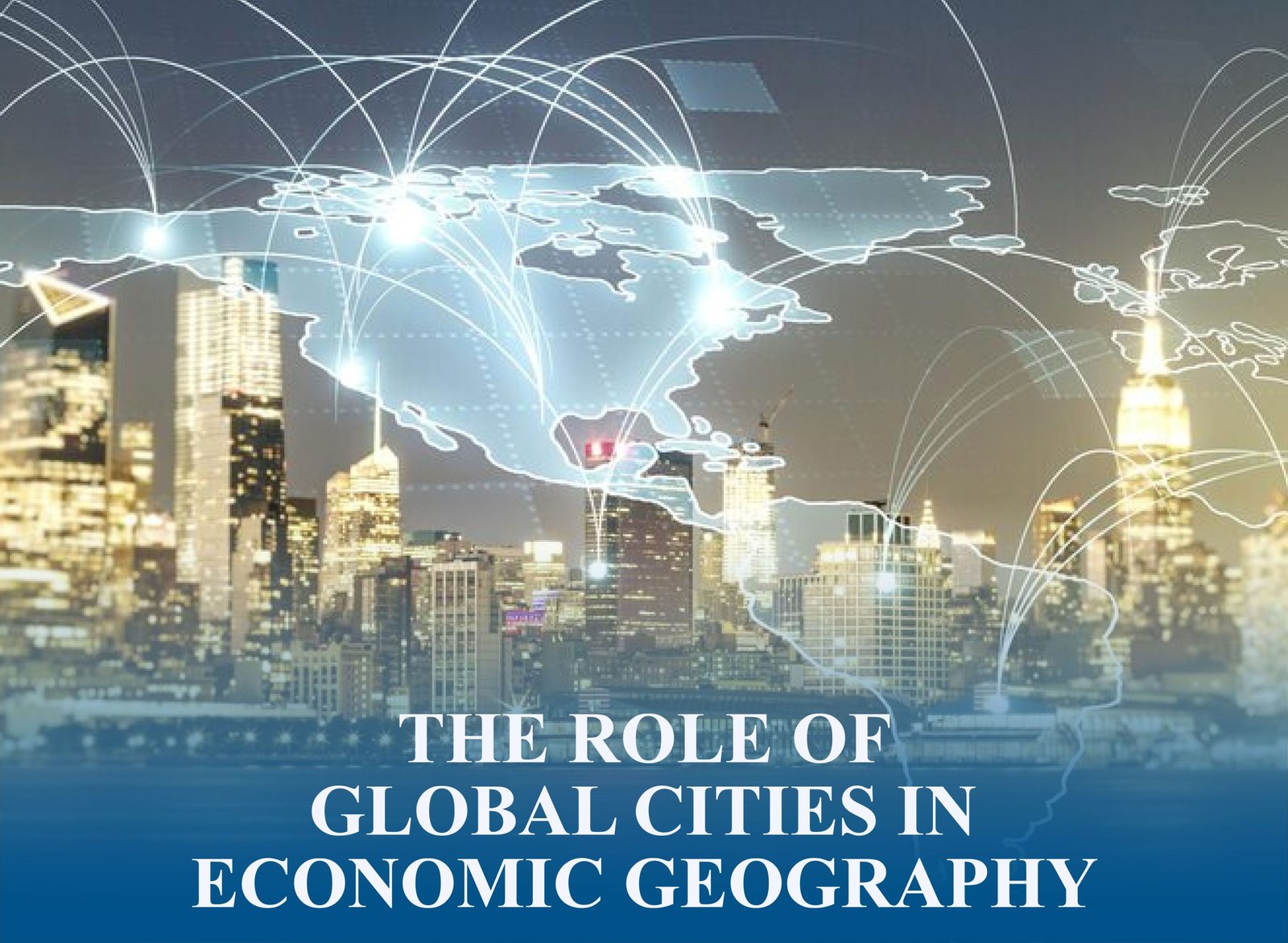
Global cities are hubs in the geographical structure of the world economy. Such metropolises as New York, London, Tokyo, and Singapore are the centers of finance, trade, innovation and cultural exchange. Global cities help define the structure of production, the flow of capital, labor movements, and technological development in economic geography. Their infrastructure is thick, connectivity high, and institutional framework impressive, hence drawing investments and talents. They are not restricted to the national lines in their roles because they serve as a bridge between the developing markets and developed economies.
Such cities accumulate decision making and become the seats of multinational corporations, international banks and intergovernmental entities. Nevertheless, the same superiority gives rise to disparity between places, both inside the cities and between urban and rural areas. The geography of contemporary capitalism can hardly be comprehended without the comprehension of the works and spatial impact of global cities. With changing economic geographies, global cities will continue to play decisive roles in determining the local and international development pathways.
Financial Command and Control Centers
The global cities serve as financial control centers and they direct international money, capital and investments. New York, London and Tokyo are locations of the principal stock markets, international banks and insurers and financial regulators. These cities manage capital investments, risk protection, and cross national transactions, which provide a platform of making economic decisions. They have dense financial services ecosystems, access to highly skilled talent, and drive global finance policy, affect currency markets, and maintain state-of-the-art in banking and fintech globally.
Headquarters of Multinational Corporations
Global cities also have the headquarters of giant multinational organizations. Such companies operate multinationally on centralized bases such as Tokyo, New York and Paris with an advantage of access to capital, government, and skilled labour. Their presence is a bottom in terms of investment, global supply chains and innovation. Corporate concentration makes the city a better key strategic economic point and strengthens its position as a global business and policy-making capital.
Global Stock Exchanges and Financial Markets
The international capital accumulation and investment is dependent on stock exchange in international cities: London, Hong Kong, and New York. They facilitate equity trading, issuances, bonds and complicated financial innovations such as derivatives. Such interactions determine market prices, introduce international investors into the market and serve as economic predictors. Their performance does not only impinge on national economies but also international trade, international finance and the confidence of investors all over the globe.
Role in Global Monetary Policy Influence
Global monetary policy is dominated by cities such as Washington D.C., Frankfurt, and Basel involving organizations such as IMF, ECB, and BIS. The consequences of decisions made here influence world inflation, interest rates and liquidity. They are the cities that determine the global lending standards and stability of currencies which is vital in ensuring the macroeconomic balance in the developed and the emerging economies.
Concentration of Financial Services Talent
The world cities are the hubs of the best financial experts- including analysts, fund managers, fintech developers and even compliance officers. Such grouping of talent leads to innovativeness, strategic decision making, and competitive advantage. Banks, consultancies and technological firms thrive through a vibrant high-skill cluster. Presence of expertise also strengthens the position of the city as a stable financial hub.
Venture Capital and Startup Funding Ecosystems
San Francisco, Berlin, and Tel Aviv are cities where venture capital and early-stage startup investment is successful. These hubs provide access to investment, accelerators and mentoring and an excellent innovative culture. Their financial ecosystems accommodate disruptive technologies and fast growth ventures thus are a vital part of international entrepreneurship and economic development.
Hubs of Innovation and Knowledge Economies
Global cities are strong motors of innovativeness and generation of knowledge. They are home to world class universities, cutting-edge research and development laboratories and some of the most successful startup ecosystems globally spurring innovation in health, technology and sustainability. They have a flourishing intellectual setting, which attracts international talent and investors to facilitate joint research and entrepreneurship. Through education, infrastructure and capital, the cities export these innovations globally and create fashions that affect industries and policy across the continents, cementing their position at the center of the global knowledge economy.
World-Class Universities and Research Institutions
Other prestigious universities found in the top global cities include MIT, LSE and NUS. These institutions are leaders in scientific research, policy and high impact innovation. Their relations with industries quicken the rate of technology transfer and directly influence the national and global agendas. They also tap into international talent and make way to academic excellence and supply a skilled workforce that contribute to knowledge economies based in cities.
Startup Ecosystems and Tech Clusters
Cities such as Tel Aviv, Toronto, or Berlin have tech clusters that support the startup landscape with the help of incubators and accelerators, and a lot of venture capital. Such environments integrate talent, infrastructure and mentorship that can help ideas grow to a global business within record time. Their innovative culture has led to entrepreneurship, creating employment and transforming the regional economy in areas, including AI, fintech, and clean energy.
Public-Private Innovation Partnerships
City-regions tend to be innovation centers, with governments, universities and independent companies in partnership. Such PPPs invest in R&D, infrastructure, and address complicated urban issues such as climate change, mobility, and other issues. Such collaborations have the potential to achieve scalable solutions because they create shared risk and share the goals that can better the city life and simultaneously create a sustainable economic growth.
Knowledge Spillovers Across Industries
City density in international cities contributes to inter-sectoral collaboration. When engineering biotechnology companies, consultancies and creative industries are in the same neighborhood, they share knowledge, pool the labor market and generate innovative solutions. These knowledge spills increase productivity, promote competitive advantage, and help speed the startup of new business making cities a rich environment to develop multidisciplinary innovation and growth.
Digital Infrastructure and Smart City Technology
Globally, cities are in the forefront when it comes to installing superior digital architecture such as 5G, open data platforms, and smart grids. Such technologies are helpful in supporting the efficient public transport, energy management, and emergency response systems. They also facilitate digital governance, improve urban planning and come up with livable and resilient environments that sustain social and economic viability over the long run.
Gateways for Global Trade and Mobility
Global cities are key commodities in the global trade, transportation, and digital interaction. They are linked to the world of production facilities, linked to consumers across the globe and to the financial infrastructure world with expansive ports, major airports, and high-speed data infrastructures. They are well positioned strategically with advanced logistics, which allow speed, security, and juicy logistics of goods, human beings and information. Global cities incorporate both the physical and digital connections to enable global trade, expedite supply chains, and support international business, thus making them irreplaceable in economic geography.
Strategic Location and Transport Infrastructure
Big cities such as Dubai, Singapore, and Shanghai (among others) prosper because of the geographic location and investment in facilities such as ports, airports, etc. These resources enable them to handle large volumes of trade, act as transshipment centers and control shipping routes internationally. Their infrastructure also provides them with competitive advantage in both local and cross-continental trade.
Role of Airports in Business Travel and Trade
In cities such as Heathrow, JFK, Incheon airports host massive numbers of business travelers and cargo. They make it possible to travel by executives across the world and host meetings and they facilitate quick transportation of perishable or expensive goods. Such airports serve as the economic drivers, promoting tourism, trade, and business among the multinational companies.
Multimodal Logistics and Urban Freight Systems
Multimodal logistics of the world cities integrate the road, rail, air, and sea network as an interrelating freight network. E-business, manufacturing and export activities are boosted with this integration as the delivery time and costs are reduced. The proper urban freight system further contributes to the lessening of congestion and emissions enhancing general sustainability.
Trade Facilitation Through Digital Platforms
The digital environment of metropolitans such as Rotterdam or Shenzhen streamlines the trade through such procedures as digitalization of their customs clearance, payment, and shipping papers. Such technologies reduce the barrier to transactions, quicken the process of exports and imports, and, most importantly, allows smaller companies to trade freely across boundaries, enhancing efficiency and inclusion.
Data Connectivity and Digital Exchange
Real-time digital exchange is brought about by fiber-optic networks, cloud infrastructures, and data centers within cities such as Frankfurt and Tokyo. This connectivity enables global communications as well as remote work and financial markets. These cities are becoming strategic spots of the world data economy as digital trade increases.
Cultural and Human Capital Magnetism
World cities are not only economic agglomerations; they are human capitals and cultural brick pits. People come into their countries and are lured by their cosmopolitan lifestyles, their worldly foods, arts cultures and inclusive settings. These cities embrace diversity of culture and professional possibilities which fuel innovation, creativity and productivity. The high density of human talent, artists, students, entrepreneurs drives dynamism in the city and contributes to global cities remaining to have significant reach well beyond the physical areas in soft power and talent-based expansion.
Migration and Multiculturalism in Global Cities
Such cities as Toronto, Sydney and Dubai live on immigration. The urban economies are split to absorb different skills, views and innovativeness of their multicultural populations. This multiplicity enables inclusive innovation and enriches civic life and increases international bridges, which create trade, diplomacy, and sharing knowledge, which are essential aspects of economic geography in the globalized age.
Global Events and City Branding
When one gets mega-events such as the Olympics or the G20 summits, it elevates the image of the city in the global scene. Through events, infrastructure will be upgraded and investors attracted as well as creating tourism. Innovation, culture, and leadership at global stages make cities such as Tokyo and Paris stronger in their reputations, and helps establish themselves to be influential globally.
Creative Economies and Cultural Exports
World cities such as Seoul, Paris and Los Angeles are engines when it comes to fashion, music, movie and design. Not only are these industries used in increasing economic output but also in shaping the tastes and values of the world. Creative exports enhance soft power, tourism and worldwide connection making cities cultural control and economic lead creators.
Education and International Student Hubs
Global universities are those that are of top quality with foreign students inhabiting universities in major cities such as London, Boston and Melbourne. These global centers boost the local economy, improve on academic standards, and contribute to the long-run retention of talents. Some of the graduates remain after the studies, and this helps to form talented resources and strengthen ties globally in education and industry.
Quality of Life and Global Talent Retention
Global cities need to invest in livability to stay competitive in providing: world-class healthcare, safety, not excluding public space and efficient and reliable transport. These elements are appealing and preserve talented individuals, business people, and artists. A good quality of life provides long-term economic vitality and serves as an appealing option to both worldwide talent and investors.
Global Cities and Spatial Inequality
Global cities are innovative and dominant cities in terms of finances but are also a symbol of the dark spatial and social differences. Challenges such as affordability of housing, informality in labor and disparateness with infrastructures are sustained as economic power consolidates. High urbanization is likely to displace vulnerable groups and increase inequality and accessibility of key services. Such inequalities cast doubt on justice and inclusion in urban areas on high priority. Cities should fill these gaps by creating equal plans and affordable houses and investments in underserved areas to become permanently sustainable.
Rising Cost of Living and Housing Affordability
The housing prices increase at a higher rate than the wages in some cities such as San Francisco and Hong Kong. The middle and low-income citizens are unable to live in affordable accommodation. This breeds displacement and segregation. The three most important mechanisms at the disposal of policies to maintain affordability and diversity in urban centers include rent control, investment in public housing and inclusive zoning.
Urban Segregation and Gentrification
Gentrification completely alters the communities and usually displaces the locals so that they can be replaced by new and richer members. On the one hand, it renews the infrastructure; on the other, it brings cultural genocide and creates social polarization. Urban areas have to embrace inclusive development policies, community land trust, and tenant protection to make growth inclusive.
Informal Labor and Precarious Work
Many global cities are characterized by an intense informal workforce: working on the street or using the gig economy. Employees do not have workers rights, compensations, or employment stability. Channels of Urban Policies should make these workers integrate with legal policies, skills development and include them on fair access to labor rights to minimize the vulnerability and realization of livelihood sustainability.
Infrastructure Disparities Within Cities
Differentiated and wealthy areas tend to have the best schools, transport, and medical care, whereas the poor areas are left forgotten. This disparity of investment leaves residents stuck in patterns of poverty and unable to move freely. Fair investment in infrastructure, neighborhood planning and access sensitive administration of services are about the only input that is needed to fix the intra-city contest.
Green Space and Environmental Justice
The poor neighborhoods tend to lack access to green infrastructure, clean air and parks. Greater pollution, heat stress, and poor health results are experienced by these populations. To achieve environmental equity, the urban planners should improve the green space, enforce the pollution regulations, and heavily invest in environmentally friendly initiatives in struggling communities.
Governance, Resilience, and Global Urban Leadership
Global cities do not necessarily mean only economic key players; they also take center stage in global governance. As they gain such autonomy, numerous cities develop their own policies which also affect national and international policies. These megacities also drive climate adaptation, pandemic preparedness and digital governance. Cities with good institutions, grounded decision-making, and active civic engagement weather some of the most complicated issues. Given the world is turning to a globalised world, proper governance in global cities is a must to develop resilience, leverage innovations, and above all, have an inclusive sustainable development in the future.
City Diplomacy and Global Networks
The world cities are connected by the intercity cross-border alliances such as UCLG or C40. These networkings encroach on the national politics of climate change, migration and sustainability. Urban diplomacy boosts cross international cooperation and a demonstration of urban leadership in addressing global issues.
Climate Resilience and Sustainability Strategies
There are threats of increased climatic embraces in the urban regions such as high temperature with heatwaves, flooding, and sea-level elevation. Amsterdam and Singapore are among the cities that are leading by their resilient infrastructure, Emission cuts, and green innovations. Local action on climate frequently goes ahead of national response, and establishes global precedent.
Health Systems and Urban Crisis Response
Cities were the epicenters of COVID-19, yet were on the frontlines. Local governments were in charge of lockdown, the process of distributing vaccines, and communicating health issues. Health infrastructure, surveillance, and preparedness planning are now things to be considered as part of urban resilience.
Digital Governance and Smart City Initiatives
In the smart cities, data is used to enhance governance. Digital tools transform transparency and service delivery, in issues such as: traffic flow and waste collection. The cities such as Seoul and Barcelona show that technology can address the multiple challenges of a city and build trust among citizens.
Civic Participation and Urban Inclusion
Good citizenry entails the participation of the citizens. Transparency and social trust are enhanced by participatory budgeting, open councils and neighborhood planning. The principle of inclusive decision-making enables the fulfillment of different needs and increases resilience and democratic accountability in the city.
Conclusion:
Global cities have become the epicenter in the economic geography of today. Being financial, technological, cultural and logistical centers, they organize immensely large networks of people, capital and ideas. They have a vast influence way beyond their national boundaries that has affected patterns of trade, innovation cycles, labor movements, and growth within regions. However, at the same time, their power draws attention to the issues of space inequalities and urban problems, such as the housing crisis or environmental pressure. To ensure that the global cities continue being resilient and inclusive, there is a need to coordinate their governance, invest in their public infrastructure and ensure their policies uphold affordability and equity.
With the emergence of new cities and the development of digital technologies, the landscape of influence can be varied- however, the position of global cities as the nerve system of an international economy can not be substituted. Becoming knowledgeable about their workings and how they influence wider patterns of growth is also essential to planners, investors and policy-makers who have to move within a rapidly changing world.
Our world is run by global cities. As an investor, policy-maker, or researcher, it is essential to realize how they impact space. Foster inclusive cities, development, innovation, and promote sustainability affecting future cities that become future-proof and empower local people within as well as international networks.
FAQs
1. What does a global city mean?
Global City is a large city that has its place in international markets, influences international finance, trade, culture and communication, and links the economies of the world.
2. What are global cities to economic geography?
They accumulate capital, labour and decision making process, and influence the growth of regions and the international system of economic flows.
3. Do global cities have implications on regional inequality?
They can increase inequality as they tend to concentrate resources and investments in few regions as they also create wealth.
4. Which industries are global cities?
Global cities are most probably to be found in areas of finance, technology, media, creative industries, education and logistics.
5. What role do global cities play towards innovation?
They incubate startups through universities, tech hubs, and ventures and encourage R&D sector collaborations.
6. Are global cities achievable in developing cities?
Yes indeed, as long as they are able to strategically invest in infrastructure, education, and foreign connections, emerging economies cities can become global.

How Global Economic Geography Drives Market Trends

The Role of Geography in Shaping International Policies

The Role of Global Cities in Economic Geography

Understanding the Economic Geography of Emerging Economies

How Geography Determines the Location of Global Cities

Understanding the Global Economic Geography of Financial Markets

How Economic Geography Impacts International Investment

Economic Geography and International Trade Relations

The Impact of Global Economic Geography on Local Economies

Understanding the Geography of Global Trade Flows

How to Approach the Study of Economic Geography in University

How to Study Spatial Distribution of Industries

Understanding the Role of Transportation in Economic Geography

How Geographical Features Affect Agricultural Production

Economic Activities Based on Geography in Developing Countries

Mapping Economic Activities Across Geographical Regions

Understanding the Geography of Global Supply Chains

How Economic Geography Shapes Regional Economies

Regional Disparities in Economic Development and Geography

The Impact of Natural Landscapes on Economic Activities

Best Books for Learning Economic Geography to Build Strong Foundations in Spatial Economics
How Geographical Features Affect Agricultural Production

Key Concepts in Economic Geography for Beginners

How to Understand the Impact of Geography on Economics

Economic Geography Strategies for Sustainable Development
How Economic Geography Shapes Regional Economies

Understanding Economic Regions and Their Economic Activities

Tips For Studying Economic Geography Efficiently

Insights into How Natural Resources Affect Economic Geography

How to Analyze the Relationship Between Geography and Economy
Understanding the Geography of Global Trade Flows
How to Study Spatial Distribution of Industries
How to Approach the Study of Economic Geography in University
The Role of Global Cities in Economic Geography
How Geography Determines the Location of Global Cities
The Impact of Natural Landscapes on Economic Activities
Understanding the Global Economic Geography of Financial Markets
How Global Economic Geography Drives Market Trends
Understanding the Economic Geography of Emerging Economies
Mapping Economic Activities Across Geographical Regions
How Global Economic Geography Drives Market Trends
The Role of Geography in Shaping International Policies
The Role of Global Cities in Economic Geography
Understanding the Economic Geography of Emerging Economies
How Geography Determines the Location of Global Cities
Understanding the Global Economic Geography of Financial Markets
How Economic Geography Impacts International Investment
Economic Geography and International Trade Relations
The Impact of Global Economic Geography on Local Economies
Understanding the Geography of Global Trade Flows
How to Approach the Study of Economic Geography in University
How to Study Spatial Distribution of Industries
Understanding the Role of Transportation in Economic Geography
How Geographical Features Affect Agricultural Production
Economic Activities Based on Geography in Developing Countries
Mapping Economic Activities Across Geographical Regions
Understanding the Geography of Global Supply Chains
How Economic Geography Shapes Regional Economies
Regional Disparities in Economic Development and Geography
The Impact of Natural Landscapes on Economic Activities
-
 General Economic Geography Tips10 months ago
Best Books for Learning Economic Geography to Build Strong Foundations in Spatial Economics
-
 Geographic Distribution of Economic Activity5 months ago
How Geographical Features Affect Agricultural Production
-
 General Economic Geography Tips10 months ago
Key Concepts in Economic Geography for Beginners
-
 General Economic Geography Tips10 months ago
How to Understand the Impact of Geography on Economics
-
 General Economic Geography Tips10 months ago
Economic Geography Strategies for Sustainable Development
-
 Geographic Distribution of Economic Activity5 months ago
How Economic Geography Shapes Regional Economies
-
 General Economic Geography Tips10 months ago
Understanding Economic Regions and Their Economic Activities
-
 General Economic Geography Tips10 months ago
Tips For Studying Economic Geography Efficiently


